
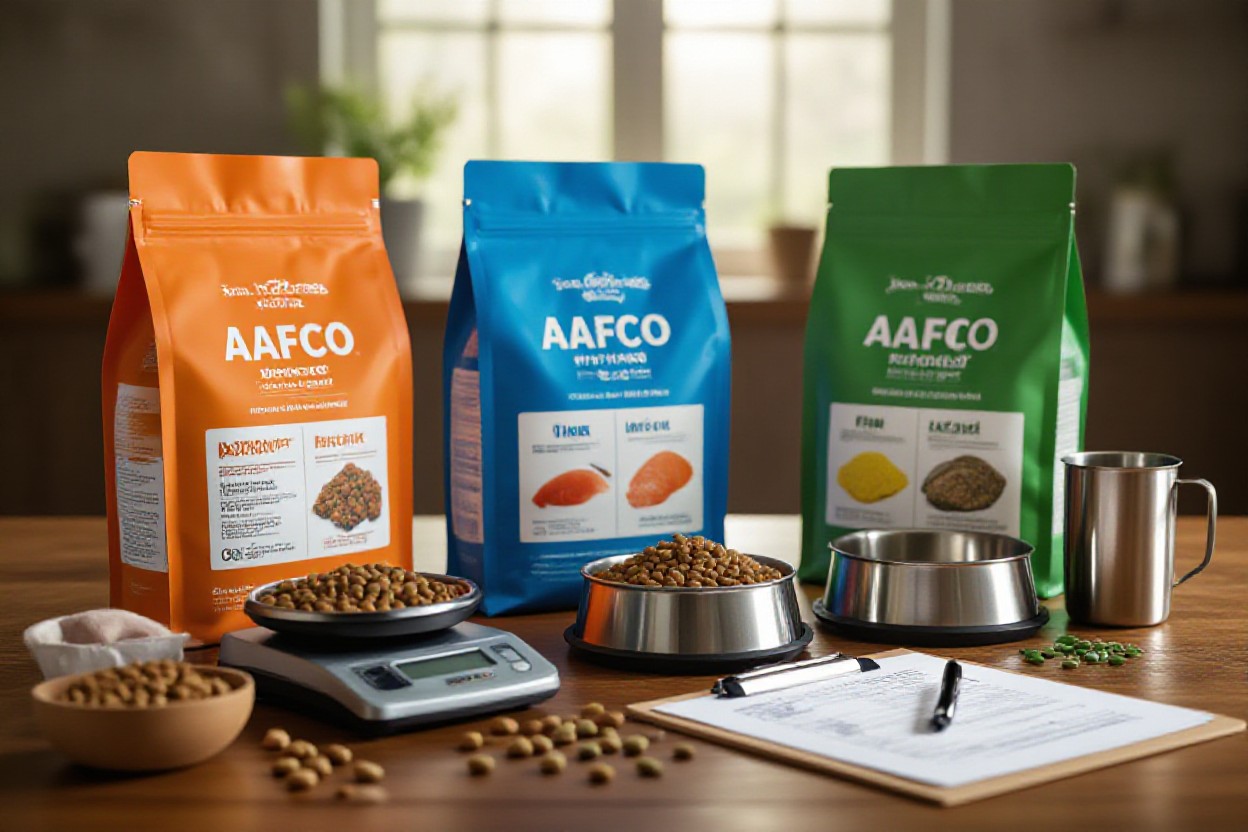
AAFCO Pet Food Standards Explained in Simple Terms
There’s a national model system-developed by AAFCO-that defines pet food nutrient profiles, ingredient labeling, and feeding trial claims so you can evaluate products with confidence; understanding these standards helps you check whether a formula meets your pet’s life stage, interpret labels like “complete and balanced,” and spot marketing that lacks substantiation.
This guide breaks down key terms and practical steps for choosing food your pet truly needs.
What is AAFCO?

The Association of American Feed Control Officials (AAFCO) creates model regulations, nutrient profiles, and labeling definitions for pet foods so you can interpret labels, compare products, and expect consistent standards; it’s not a federal agency, but its models guide state regulators who enforce pet food laws.
Definition and Purpose
With precise ingredient definitions, minimum nutrient levels, and feeding-trial protocols, AAFCO provides you and regulators a common framework to assess nutritional adequacy and ensure labels accurately reflect what’s in your pet’s food.
History and Background
What began in the early 20th century as a collaboration among state feed officials grew into AAFCO, where you now benefit from ongoing updates developed by regulators, industry scientists, and academicians to address emerging nutrition and safety issues.
Purpose: to deliver consensus-based model standards and an Official Publication that you can rely on and that many states adopt, created through committee review, public comment, and annual meetings to keep pet food rules uniform and transparent.
AAFCO Nutritional Standards
There’s a national framework from AAFCO that defines minimum and maximum nutrient profiles for dogs and cats, so you can compare labels and select foods that meet standardized protein, fat, vitamin and mineral levels to support your pet’s overall health.
Basic Nutritional Requirements
Among the basic requirements are minimums for protein and fat, maximums for certain minerals, and specified vitamin levels, plus limits on moisture and fiber; you use these benchmarks to assess ingredient adequacy and ensure diets supply vital amino acids and micronutrients.
Life Stage and Formulation Guidelines
Along with nutrient profiles, AAFCO sets life-stage and formulation guidelines-growth, maintenance, all life stages, gestation/lactation-so you can choose foods tailored to your pet’s age and physiological needs and check whether a product is formulated to meet profiles or proven by feeding trials.
Another distinction you should note is that “formulated to meet” relies on lab analysis of nutrient levels, while “feeding trial” demonstrates real-world performance; for young, pregnant or medically sensitive pets you may prefer diets validated by feeding trials and consult your veterinarian.
Pet Food Labeling Regulations
Assuming you need straightforward guidance, AAFCO labeling rules require the product name, net weight, manufacturer name and address, species intended, feeding directions, guaranteed analysis, ingredient list, and nutrition statement so you can compare products and ensure your pet’s food meets regulatory standards.
Ingredient Labeling
One rule requires ingredients be listed by common name in descending order by weight, letting you identify primary components; collective terms, meat-by-products, and flavorings are regulated so you can evaluate ingredient quality and avoid misleading descriptions.
Nutritional Adequacy Statements
Alongside ingredients, labels must include a nutritional adequacy statement declaring whether the food is complete and balanced for a specific life stage or whether it was formulated to meet AAFCO nutrient profiles or proven by feeding trials, helping you confirm suitability for your pet.
With that statement you should check the life stage designation (growth, maintenance, all life stages, gestation/lactation) and whether the manufacturer cites formulation or AAFCO feeding-trial substantiation, so you can determine if the product truly meets your pet’s nutritional needs.
AAFCO Feeding Trials
After reviewing AAFCO feeding trials, you will know they test pet foods using live animals under controlled conditions so you can trust label claims about growth, maintenance, or reproduction and make better choices for your pet.
Purpose of Feeding Trials
Trials assess whether a food maintains health, supports growth, and avoids adverse effects by tracking weight, bloodwork, stool, and overall condition so you can rely on outcomes rather than just nutrient profiles.
Types of Feeding Trials
Feeding trials include several formats that show how diets perform in real animals; below are typical categories and what you should watch for.
| Trial Type | What it shows |
| Growth | Support for puppies/kittens |
| Maintenance | Adult health stability |
| Reproduction | Pregnancy/lactation adequacy |
| Digestibility | Absorption and stool quality |
- Controlled groups and diets to compare outcomes
- Specific life-stage focus for relevant results
- Clinical monitoring for safety signals
- Standardized feeding and observation periods
Any trial result should inform how the food might affect your pet in everyday conditions.
With more detail, you should know each trial uses set protocols, sample sizes, and endpoints so you can evaluate reliability; check duration, measured parameters, and whether the study used healthy animals like yours.
| Aspect | What to check |
| Duration | Longer reveals long-term effects |
| Sample size | Bigger improves confidence |
| Endpoints | Weight, bloodwork, stool |
| Population | Life stage and health status |
- Check if protocol follows AAFCO guidance
- Look for peer review or third-party oversight
- Compare trial conditions to your pet’s routine
Any careful review helps you choose foods that match your pet’s needs.
Common Misconceptions About AAFCO
Keep in mind that AAFCO provides model nutrition definitions and labeling guidance, not endorsements or quality ratings; you should know a “AAFCO-compliant” claim means the diet meets defined nutrient profiles or feeding-trial protocols, but it doesn’t guarantee ingredient quality, safety, or that the food suits your pet’s specific health needs-consult your veterinarian to match diet to your pet’s life stage and condition.
Myths vs. Facts
For many pet owners, AAFCO is mistaken for a regulatory seal of approval; you should understand it’s a set of model standards adopted by some states and used by manufacturers, and that a “complete and balanced” claim can be based on nutrient calculations or on feeding trials with animals, so check which method was used when evaluating a food for your pet.
Understanding the Limitations
Across the industry, AAFCO helps standardize terms but does not assess ingredient sourcing, manufacturing consistency, or long-term health outcomes; you should treat compliance as a baseline and monitor your pet’s weight, coat, energy, and health, seeking veterinary guidance if the diet doesn’t meet your pet’s individual needs.
Limitations also include that AAFCO doesn’t certify safety, test for contaminants, or enforce marketing beyond nutrient adequacy; you should consider third-party testing, manufacturer transparency, and professional advice to evaluate whether a product performs well for your pet in real-world use.
Importance of AAFCO Compliance

Not meeting AAFCO standards can make it hard for you to know whether a pet food meets minimum nutrient levels or has been verified by feeding trials; compliance gives you assurance that product labels reflect tested nutrient profiles and consistent formulations, helping you choose safer, nutritionally complete diets for your pet.
Benefits to Pet Owners
Any pet owner benefits when products follow AAFCO because you get consistent labeling, clear nutrient guarantees, and simpler comparison between brands, so you can select diets suited to your pet’s life stage, size, and health needs with greater confidence.
Impact on Pet Health
Around AAFCO standards are benchmarks that guide formulation and feeding trials, so you can expect better prevention of nutrient deficiencies and excesses; when manufacturers comply, your pet’s growth, maintenance, reproduction, and overall condition are more likely to be supported by evidence-based nutrition.
In fact, when you feed diets formulated or tested to AAFCO profiles, clinical signs like poor coat, stunted growth, digestive upset, or lethargy become less likely, and you have clearer expectations about nutrient levels to help you and your veterinarian manage special needs or long-term health plans.
Summing up
Drawing together the AAFCO pet food standards, you can use them as a straightforward benchmark to assess labels, ingredient lists, and nutritional adequacy statements so your pet receives balanced nutrition; understanding feeding trials, nutrient profiles, and regulatory roles helps you compare products confidently and ask informed questions of manufacturers and your veterinarian when choosing and monitoring your pet’s diet.






2 Comments