

Kitten Feeding Guide: Portion Size, Frequency, and Best Food Types
feeding your kitten the right portions, scheduled meals, and nutrient-rich food sets the foundation for health; this guide explains how to determine portion size by age and weight, how often to feed during growth stages, and which high-quality wet and dry options meet protein, fat, and DHA needs so you can make confident, vet-aligned choices for your kitten’s development.
Understanding Kitten Nutritional Needs
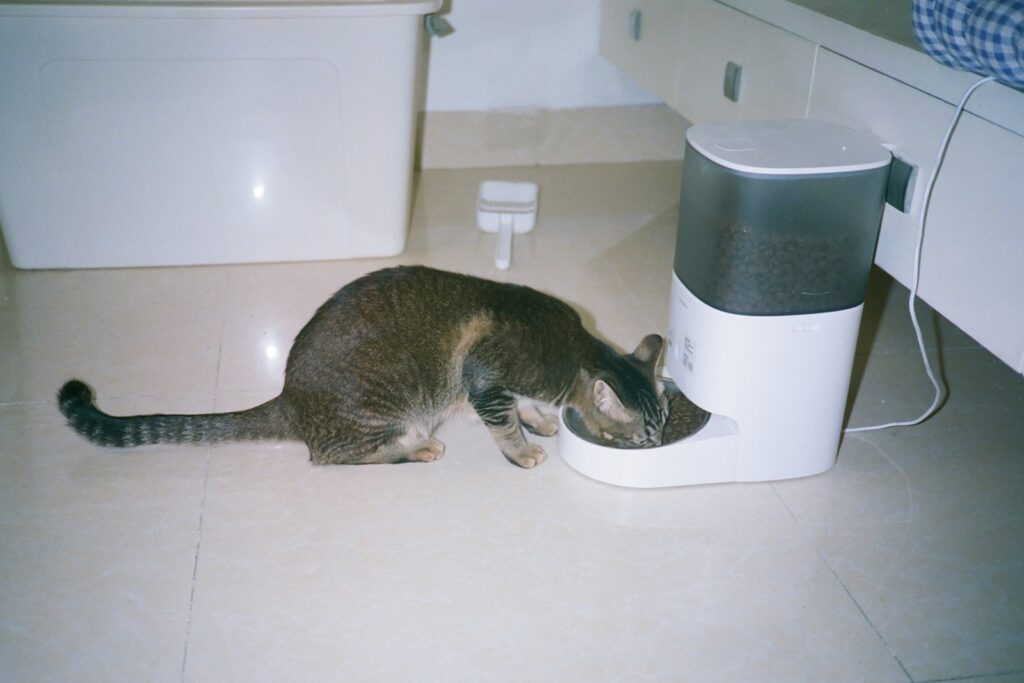
A balanced diet gives your kitten the proteins, fats, vitamins, minerals, and water needed for rapid growth, immune development, and energy; you should choose foods formulated for kittens, monitor intake, and consult your veterinarian to tailor feeding to health, activity, and breed.
Essential Nutrients for Growth
Kitten diets must provide high-quality animal protein, DHA for brain and vision, adequate fat for energy, calcium and phosphorus for bone development, and vital vitamins and minerals; you should check labels for an AAFCO or similar statement and prioritize complete, balanced kitten formulas.
Age-Specific Dietary Requirements
Behind the scenes of development, neonatal, transitional, and juvenile stages demand different calorie densities and feeding frequencies: you’ll bottle-feed or offer formula to orphans, introduce wet and softened dry foods at weaning, then increase portion sizes and adjust macronutrient balance as growth slows.
Another consideration is feeding frequency and portioning by age: you should feed newborns every 2-4 hours, offer multiple small meals during weaning, provide 3-4 meals daily through 4-6 months, then gradually shift to twice-daily feedings as activity and growth rates decline; adjust portions to maintain steady weight gain and check with your veterinarian.
Portion Size Guidelines
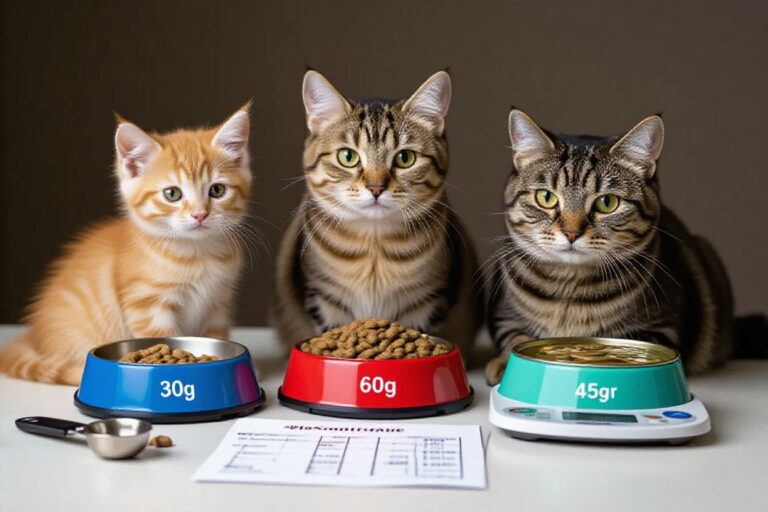
There’s no one-size-fits-all portion for kittens; you should base servings on age, current weight and food calorie density. Start with the manufacturer’s feeding chart, divide the daily allowance into frequent small meals, use a kitchen scale or measuring cup for accuracy, and track weight weekly to fine-tune portions for steady, healthy growth.
Calculating Daily Food Intake
Across a 24-hour period, calculate your kitten’s daily food by checking the food’s kcal per cup and the package feeding guideline for weight/age; determine the total daily calories your kitten needs, then convert that calorie total into volume using the product’s kcal-per-cup or kcal-per-can and split into multiple meals.
Adjusting Portions for Growth and Activity Level
At different growth stages and activity levels you should increase or decrease portions: young, fast-growing kittens need gradual portion increases every few weeks, while highly active kittens require extra calories; monitor weight and body condition and tweak portions to sustain steady, appropriate gains.
Food type and calorie density affect portioning: growth formulas and wet foods often deliver more kcal per serving than adult dry diets, so reduce volume when switching to higher-calorie diets, measure precisely, reassess monthly, and consult your veterinarian if weight trends fall outside expected ranges.
Feeding Frequency
You should feed kittens multiple small meals daily to support rapid growth and high energy needs; schedule and portions vary with age, weight, and health, so monitor your kitten’s appetite and body condition and adjust as they develop, consulting your veterinarian when changes are needed.
Recommended Feeding Schedule
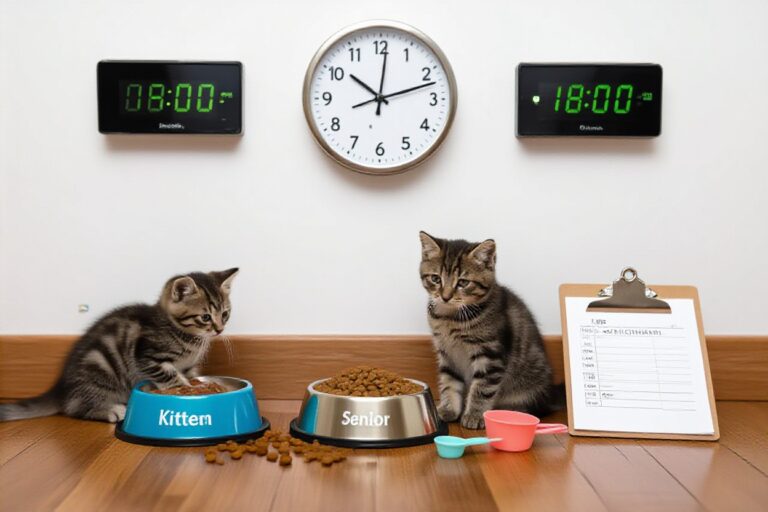
At 0-4 weeks, you will feed every 2-3 hours if bottle-feeding; from 4-8 weeks introduce moistened kitten food 4-6 times daily; at 2-6 months feed 3-4 times per day; by 6-12 months transition toward 2-3 meals as adult feeding patterns establish.
Transitioning to Fewer Meals
About moving to fewer meals: gradually lengthen intervals and slightly increase per-meal portions over one to two weeks so your kitten adapts without digestive upset; keep feeding times consistent and track weight and stool to ensure the change suits your kitten’s needs.
Another tip: reduce frequency one meal at a time, redistribute calories to remaining meals, combine wet and dry food for satiety and hydration, maintain consistent mealtimes, and contact your veterinarian if your kitten refuses food, loses weight, or shows digestive issues during the transition.
Best Food Types for Kittens
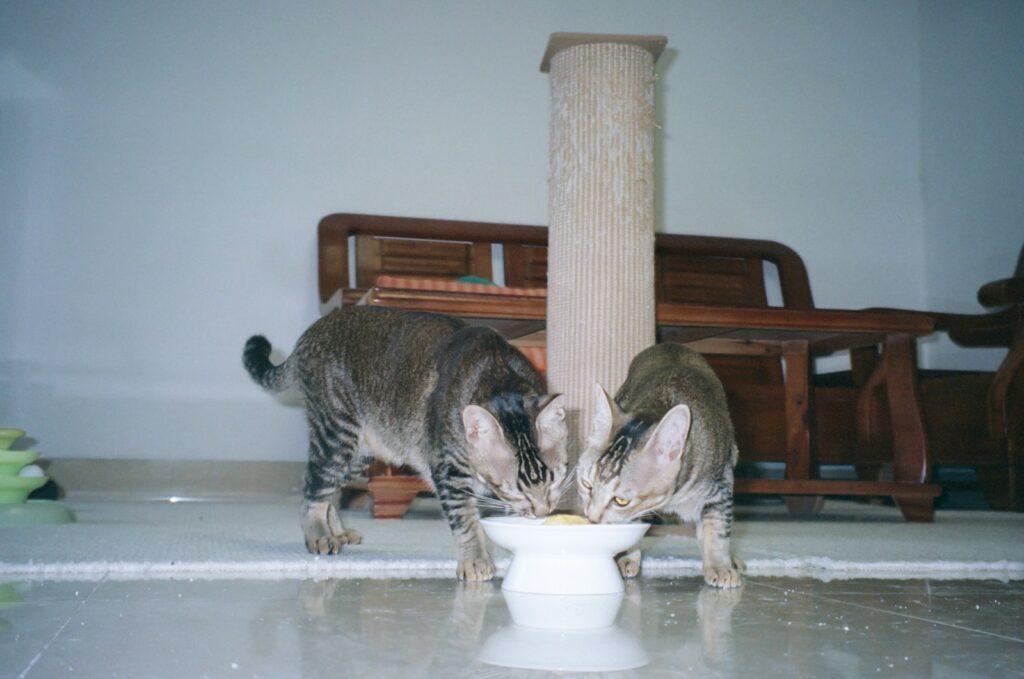
To choose the best foods for your kitten, you should prioritize formulas labeled for growth that list animal-based protein first, contain moderate fats and DHA, and address hydration and digestive needs. This approach supports your kitten’s healthy weight gain, brain development, and immune function.
- Your wet kitten formulas – high moisture for hydration and palatability
- Your dry kitten kibbles – convenient and supportive of dental abrasion
- Your balanced raw diets – only with veterinary guidance for safety
- Your vet-approved home-cooked recipes – tailored for allergies or sensitivities
| Wet kitten food | Boosts hydration and palatability for picky eaters |
| Dry kitten kibble | Convenient, aids dental abrasion and calorie density |
| Balanced raw (vet-approved) | High bioavailable protein; requires careful handling |
| Home-cooked (veterinary recipe) | Customizable for sensitivities; ensure nutrient balance |
| Specialty formulas (sensitive/stomach) | Targeted nutrients for digestion or allergies |
Dry vs. Wet Food
Against relying solely on dry kibble, you should include wet food to increase your kitten’s water intake and palatability; wet food helps urinary health and eating enthusiasm, while dry food provides convenience and some dental benefits, so balance both to suit your kitten’s hydration and lifestyle needs.
High-Quality Ingredients to Look For
Along with growth formulation, you should seek named animal proteins (chicken, turkey, fish), added DHA, taurine, probiotics, and a clear list of vitamins and minerals, while avoiding vague meat sources and excessive fillers to meet your kitten’s developmental needs.
Kittens need animal-first proteins and clear labeling, so you should choose formulas that state specific meats, include DHA and taurine for development, show an AAFCO growth claim, and avoid artificial additives; consult your veterinarian before switching to raw or homemade options to safeguard nutrient balance for your kitten.
Common Feeding Mistakes
Now you may unknowingly create bad habits-free feeding, inconsistent portion sizes, or frequent treats-that disrupt growth and digestion; set scheduled meals, use weight-based portions, and monitor body condition so your kitten develops healthy eating patterns.
Overfeeding vs. Underfeeding
Mistakes in portioning often swing between overfeeding, which promotes obesity and lethargy, and underfeeding, which limits growth and immunity; you should weigh your kitten regularly, follow age-specific guidelines, and consult your vet if weight trends deviate.
Ignoring Food Label Guidelines
Underfeeding often stems from dismissing label feeding charts or misreading calorie information; you should use the manufacturer’s guidelines as a starting point and adjust portions based on your kitten’s age, activity, and body condition.
The feeding label lists kcal per unit, recommended grams per day, and life-stage formulas-you should convert cups to grams, account for wet-food moisture, track daily calories as your kitten grows, and consult your vet when labels conflict with your observations.
Special Dietary Considerations
Despite appearing robust, your kitten may have special needs like sensitive digestion, rapid growth, or breed-specific risks, so you should monitor weight, stool, hydration, and appetite; choose kitten-formulated diets, balance wet and dry food for calories and moisture, and adjust portions as your kitten grows, and if persistent vomiting, diarrhea, or poor weight gain occur, consult your veterinarian promptly.
Food Allergies and Sensitivities
With food allergies or sensitivities, your kitten may itch, develop ear infections, or have recurrent vomiting and diarrhea; you should work with your vet to try an elimination diet using single-protein, limited-ingredient formulas, introduce new foods one at a time, and keep a detailed log of symptoms and diet changes to identify triggers.
Consultation with a Veterinarian
Among the best actions you can take is to involve your veterinarian early to personalize feeding plans, assess growth and body condition, screen for parasites or metabolic conditions, and recommend specific therapeutic diets or supplements when indicated; your vet will help set portion sizes and feeding frequency based on age, breed, and health status.
In fact, when you visit the clinic bring current food labels, a feeding log, photos of your kitten’s body condition and stool, and a list of symptoms and medications; expect fecal tests, possible allergy testing, and growth monitoring, with follow-up visits to adjust the plan as your kitten develops.
Final Words
Presently you should base kitten portions on weight and age, offering small frequent meals and adjusting as growth slows. Choose high-quality, species-appropriate wet and measured dry formulas rich in protein, DHA, and balanced nutrients, and consult your veterinarian to tailor feeding frequency and portions to your kitten’s development and activity level.



2 Comments