
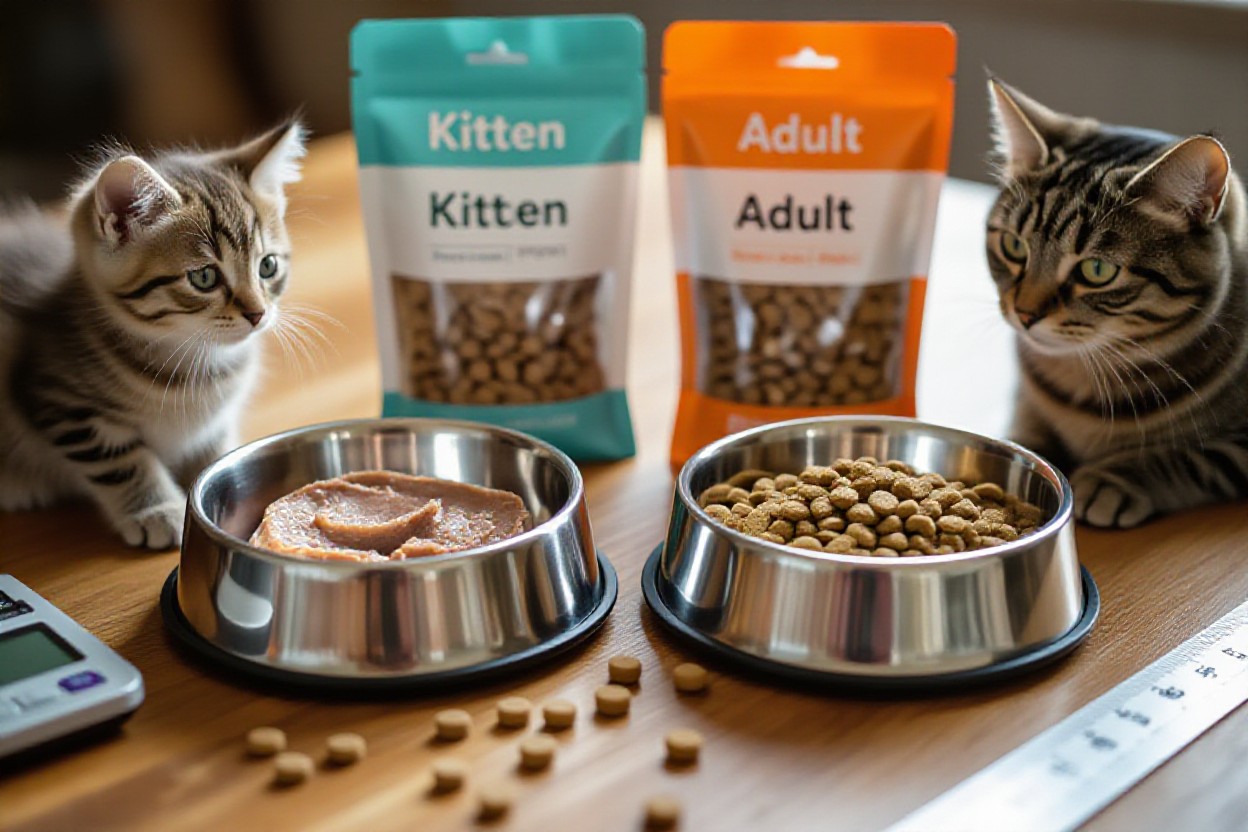
Kitten Food vs Adult Cat Food: What’s the Real Difference?
Kitten food and adult cat food may look almost identical in the bowl, but nutritionally they are built for two completely different stages of life. A kitten’s body is growing at an extreme pace building bones, organs, muscles, and a developing immune system all at once.
An adult cat’s body, on the other hand, is focused on maintenance, stability, and long term health. Because of this, the balance of protein, fat, calories, vitamins, and minerals inside the food is not just slightly different, it is fundamentally different.
Understanding this difference is critical. Feeding adult food to a kitten can slow growth and weaken development, while feeding kitten food to an adult cat long term can quietly push weight gain and metabolic stress.
In this guide, we’ll break down what really changes between kitten and adult formulas, why those changes exist, and how to know exactly when to switch.
Nutritional Needs of Kittens

Before you choose a diet for your kitten, recognize that their metabolism and nutrient demands are higher than an adult cat’s; you must offer energy-dense, growth-formulated food to support rapid development and immune health.
Growth and Development
For growth and development, your kitten needs more protein and calories per pound than an adult, and feeding age-appropriate formulas supports bone growth, muscle development, and proper neurological maturation.
Essential Nutrients
Behind healthy growth are adequate protein, bioavailable fats (including DHA), balanced calcium and phosphorus, and vitamins and minerals formulated to AAFCO growth standards so your kitten meets developmental milestones.
And you should avoid unbalanced homemade diets, since excess or improper ratios-especially calcium or vitamin D-can damage developing bones; consult a veterinary nutritionist if you alter commercial feeding.
Nutritional Needs of Adult Cats
Some adult cats need balanced protein, moderate fat, minimal carbs, and imperative vitamins and minerals; you must match calories to activity to prevent weight gain, support organ function, and maintain muscle mass as your cat ages.
Maintaining Health
About preventing obesity, dental disease, and urinary issues, you should feed controlled portions, offer high-quality protein, ensure fresh water, and monitor weight and behavior; regular vet checks help adjust diet to your cat’s life stage and lifestyle.
Key Nutritional Components
For adult cats, you should prioritize animal-based proteins, taurine, arachidonic acid, vitamin A, balanced fats, and appropriate calcium-phosphorus ratios; carbohydrates should be limited and fiber adjusted for digestion and weight control.
Plus, you need to look at calorie density and omega-3/6 balance, read labels for guaranteed analysis, and choose formulas that meet AAFCO profiles or are vet-recommended to ensure your cat receives consistent nutrition.
Differences in Ingredients
Even though both kitten and adult foods are formulated to meet feline needs, you’ll find kitten diets have higher protein, fat, calories and added vitamins and minerals to support rapid growth and development, while adult recipes focus on maintenance, controlled calories and joint or urinary health adjustments so you can feed appropriately as your cat ages.
Protein Sources
Sources in kitten food emphasize animal-based proteins-chicken, turkey, fish and beef-so your young cat receives bioavailable amino acids for muscle and brain development; adult formulas may use similar ingredients but in lower proportions and sometimes include more plant proteins to balance calories and long-term maintenance.
Carbohydrate Levels
By design, kitten formulas keep carbohydrates low and easily digestible so your kitten relies on protein and fat for energy, whereas adult diets often contain more complex carbs and fiber to support steady energy, digestion and weight management, which affects how you portion meals.
And you should evaluate carbohydrate sources-whole grains, peas and potatoes differ in glycemic impact and digestibility; choosing foods with limited, clearly named carbs helps your cat maintain stable blood sugar and a healthy weight as they mature.
Life Stage Formulas
To meet different metabolic and developmental needs, life stage formulas are tailored for kittens, adults, and seniors: kitten diets supply higher calories, protein and DHA for growth, while adult formulas provide balanced maintenance nutrients and lower calorie density so you can manage weight and long-term health.
Benefits of Age-Specific Diets
On age-specific diets, you give your cat targeted nutrition-kittens get extra protein, fat and DHA for brain, eye and bone development, while adults receive controlled calories, joint support and dental-friendly options, helping maintain energy, coat condition and reduced disease risk.
Potential Risks of Feeding Inappropriate Food
Food mismatches can cause nutrient excesses or deficits: feeding adult food to kittens can impair growth and development, whereas feeding kitten food to adults may lead to obesity and metabolic strain, so you should monitor body condition and consult your vet when switching.
Stage-inappropriate feeding over months can produce lasting issues-you may see poor skeletal formation, weakened immunity or persistent obesity that complicates management; regular weigh-ins, age-appropriate portions and gradual transitions reduce these risks and help you keep your cat healthy.
Feeding Recommendations

Keep your kitten on a growth-formulated diet until at least 12 months (longer for larger breeds), then switch to adult food gradually; base meals on age, activity, and body condition, and consult your veterinarian for tailored caloric targets. You should provide consistent meal times, fresh water, and monitor weight to adjust portions as growth slows and energy needs decline.
Portion Size and Frequency
Behind their rapid growth, kittens need more frequent meals-typically three to four daily-while adult cats usually do well on two meals. You should use feeding guidelines on packaging as a starting point, then adjust portions by checking your cat’s body condition score; weigh food if you need precision and spread calories across the day to prevent hunger-driven overeating.
Transitioning Foods
The safest approach is a slow transition over 7-10 days: start with 75% old food and 25% new, gradually flip ratios until fully switched. You should monitor stool consistency and appetite during the change and pause or slow the mix if your cat shows gastrointestinal upset; abrupt swaps can cause vomiting or diarrhea, so prioritize gradual shifts and consistency.
In addition, extend the transition to two weeks for sensitive pets, increase new-food increments only if stools remain firm, and maintain the same feeding schedule to reduce stress. You should offer extra hydration when switching dry foods, avoid frequent flavor hopping, and contact your veterinarian if vomiting, bloody stool, or prolonged appetite loss occurs during the change.
Understanding Labels and Marketing
Many pet food labels use life-stage claims, buzzwords and imagery to influence your choice, so you should focus on what the label actually certifies – feeding-trial results, AAFCO statements or guaranteed analyses – rather than marketing terms; check for explicit life-stage suitability, serving guidelines and whether the formula meets documented growth or adult maintenance requirements to make informed decisions for your cat.
Recognizing Quality Ingredients
With ingredient lists, prioritize named animal proteins (chicken, salmon), identifiable whole foods and minimal vague by-products or excessive fillers so you can gauge protein quality and digestibility; look for imperative nutrients like DHA for brain development in kittens and adequate taurine for heart health, and use guaranteed analysis to compare nutrient density across brands.
Avoiding Common Misconceptions
Among popular myths, you should know kitten formulas aren’t automatically harmful for adults in small amounts, grain-free doesn’t equal healthier, and higher price or “natural” labels don’t guarantee superior nutrition; assess nutrient profiles and life-stage approval rather than relying on packaging or marketing buzz.
Even when brands claim multi-life-stage suitability, you should evaluate calorie density and nutrient ratios for your cat’s age and activity level; transition diets gradually, watch weight and stool quality, and consult your veterinarian if you’re unsure which label claims truly align with your cat’s health needs.
Conclusion
Drawing together, you can see that kitten food is higher in calories, protein, fat, vitamins and minerals to support rapid growth, while adult food is formulated for maintenance, weight management and long-term health. Choosing the right diet helps you prevent nutrient gaps and obesity; transition gradually and work with your veterinarian to tailor timing, portions and special needs for your cat.