
How to Read Pet Food Labels: Ingredients, Guaranteed Analysis, and Claims
Many pet owners find labels overwhelming, but you can systematically evaluate ingredient lists to identify real meat sources, interpret the guaranteed analysis to understand protein, fat, fiber and moisture levels, and scrutinize claims like “natural,” “complete and balanced,” or breed-specific marketing so you can select a diet that matches your pet’s life stage, size, and health needs.
Understanding Pet Food Labels

While pet food labels can seem dense, you can decode ingredient lists, guaranteed analysis, and feeding directions to select a diet that meets your pet’s age, activity level, and health requirements.
Importance of Reading Labels
On every package, labels indicate nutritional adequacy, ingredient sources, caloric content, and feeding guidelines so you can judge whether a product suits your pet’s life stage and medical needs.
Key Components of Pet Food Labels
Below the product name you’ll find the ingredient list, guaranteed analysis, caloric information, AAFCO statements, feeding directions, and manufacturer contact-components that help you assess nutrient balance and ingredient quality.
Labels list ingredients in descending order by weight, show guaranteed minimums and maximums for protein, fat, fiber, and moisture, and often include calorie counts and feeding trials or statements so you can compare products.
Ingredients List
Even the ingredients list is your primary tool for assessing pet food quality; scan it top to bottom so you can spot named animal proteins near the front, distinguish meals from whole meats, note by-products and fillers, and check for artificial colors or preservatives-if your pet has allergies or special needs, use this list to narrow choices and discuss options with your veterinarian.
Order of Ingredients
Ingredients are listed by weight, so the first items are the largest contributors; because fresh meat contains water, meat meals often supply more concentrated protein per pound, and if percentages or qualifiers appear you can better judge how much of your pet’s diet is made from a named ingredient versus fillers or additives.
Common Ingredients Explained
Ingredients commonly include named meats (chicken, beef), meals (chicken meal), by-products, grains or pulses, fats, fiber, and added vitamins/minerals; you should know meals are concentrated protein, by-products may include organ tissues, and grains provide energy and fiber, while supplements round out nutritional completeness.
Consequently when comparing labels you should prioritize identifiable animal proteins high on the list, assess whether meals or whole meats align with your pet’s needs, be cautious of vague terms like “meat” without species, distinguish low-value fillers from beneficial fibers, and note preservation methods-natural antioxidants versus synthetic additives-especially if your animal has sensitivities.
Guaranteed Analysis
Some pet food labels carry the Guaranteed Analysis to show minimum percentages of protein and fat and maximum percentages of fiber and moisture; you use it to compare products and check that basic nutrient levels meet your pet’s life stage needs, but it doesn’t show digestibility, vitamin/mineral amounts, or energy density.
What is Guaranteed Analysis?
Against marketing claims, the Guaranteed Analysis is a regulated panel that lists nutrient minimums and maximums on an as‑fed basis; you should treat it as a baseline metric for protein, fat, fiber and moisture rather than a complete picture of your pet’s nutritional intake.
Interpreting Nutritional Values
For clear comparisons, convert percentages to a dry matter basis when moisture varies and weigh nutrient percentages against calorie content and ingredient sources so you can judge how much usable nutrition your pet actually gets per serving.
A practical step is to divide a nutrient’s as‑fed percentage by (1 − moisture fraction) to get dry matter percentage (e.g., protein% ÷ (1 − moisture%)). You then compare dry matter values and calories per cup to decide which formula best meets your pet’s needs.
Nutritional Adequacy Statements
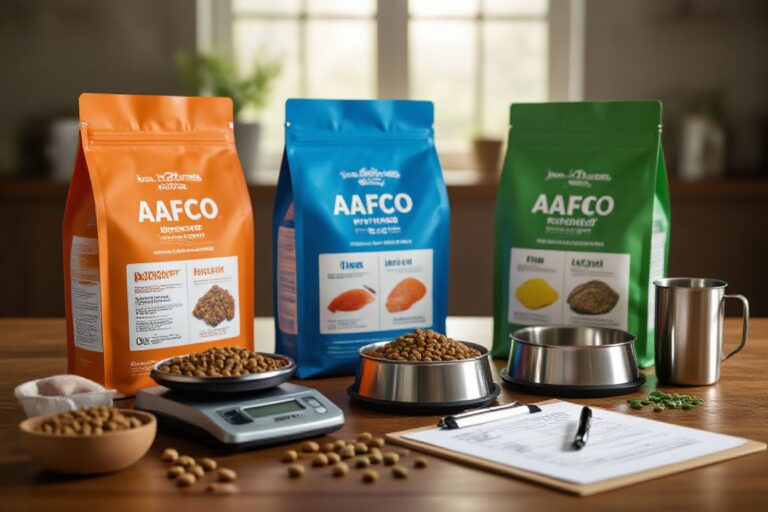
Once again, inspect the nutritional adequacy statement so you can confirm the food meets AAFCO nutrient profiles or has passed feeding trials that match your pet’s life stage and health needs.
Types of Nutritional Claims
Around label claims, you should verify exactly what is promised rather than assuming marketing equals nutrition.
| Complete and balanced | Meets AAFCO nutrient profiles or feeding trials |
| Life stage | Specifies growth, maintenance, or all life stages |
| Supplemental | Not intended as sole food |
| Feeding-trial tested | Proven with animals on the finished diet |
| Ingredient claim | Highlights an ingredient but not overall adequacy |
- Grain-free
- Limited ingredient
- High protein
Perceiving these differences lets you compare products and choose what fits your pet’s dietary needs.
Meaning Behind AAFCO Statements
On a label, an AAFCO statement tells you whether the product is complete and balanced by nutrient profile or feeding trial; match the stated life stage to your pet and check labels for formulation dates and testing method.
Statements that reference feeding trials indicate the finished diet was evaluated on animals for growth or maintenance outcomes, so you can weigh that validation alongside nutrient analysis when selecting food for your pet.
Claims and Marketing Techniques
Not every bold label claim means better nutrition; you should evaluate ingredient order, protein sources, guaranteed analysis, and life-stage statements to determine whether a product truly suits your pet’s age, size, and health needs.
Common Claims in Pet Food Marketing
About terms such as “natural,” “grain-free,” “human-grade,” or “limited ingredient”: you should treat them as marketing shorthand and verify by checking the ingredient list, AAFCO or regulatory statements, and whether the claim answers your pet’s specific dietary requirements.
Differentiating Between Facts and Marketing
Marketing can highlight a single benefit while omitting context; you should look for AAFCO feeding trial statements, nutrient panels, manufacturer transparency, and independent testing to separate verifiable facts from promotional language.
Between flashy promises and meaningful data, you can spot red flags-vague terms like ‘premium,’ no contact or sourcing info, or missing guaranteed analysis-so cross-check labels, consult your veterinarian, and prioritize documented nutrition over catchy wording.
Other Considerations

Now focus on storage, feeding transitions, and how life stage or health conditions affect the best choice for your pet; you should rotate foods gradually, keep kibble airtight and dry, and monitor weight and stool consistency to spot issues early, while also weighing cost, availability, and whether a food meets your pet’s specific needs rather than chasing trends or marketing hype.
Understanding Pet Food Regulations
Any label claims are governed by regulators like AAFCO and the FDA, so you should look for an AAFCO statement of nutritional adequacy, understand that terms like “natural” or “human-grade” have specific meanings or limits, and know that voluntary feeding trials offer stronger assurance than formulation statements alone when evaluating a product’s reliability.
Consulting with Your Veterinarian
Veterinarian guidance helps you interpret labels in the context of your pet’s medical history, allergies, and lifestyle; you should bring sample labels, discuss weight management and nutrient balance, and expect tailored recommendations that may include prescription diets or supplements when over-the-counter options aren’t appropriate.
With your veterinarian, provide a full feeding history, current label information, and notes on symptoms or behavioral changes so they can recommend tests, design an elimination diet if needed, adjust macronutrients for conditions like diabetes or renal disease, and advise on safe transitions and evidence-based supplements rather than relying solely on package claims.
Summing up
Taking this into account, you should scan the ingredient list for whole proteins and named sources, use the guaranteed analysis to compare protein, fat, fiber, and moisture percentages, and scrutinize marketing claims and feeding guidelines for accuracy and intended life stage. Combine label reading with your pet’s needs, veterinary advice, and ingredient research to choose a nutritionally appropriate, safe diet for your animal.