Grain Free Dog Food: Miracle Diet or Health Risk?
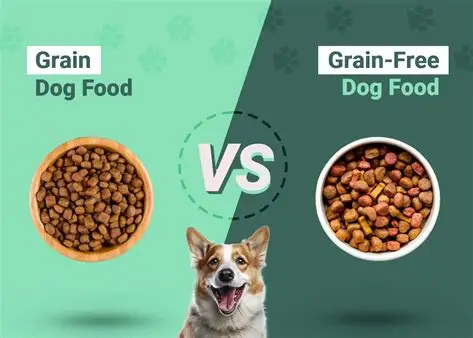
“Grain-free” has become one of the most powerful marketing phrases in pet food, promising a more “natural,” ancestral diet. But in recent years, that promise has run into a real controversy: a possible link between grain-free diets and heart disease in dogs. This post breaks down grain-free versus grain-inclusive dog food, and what the evidence actually says about digestive issues, heart health, and allergies.
What Is Grain-Free Dog Food?
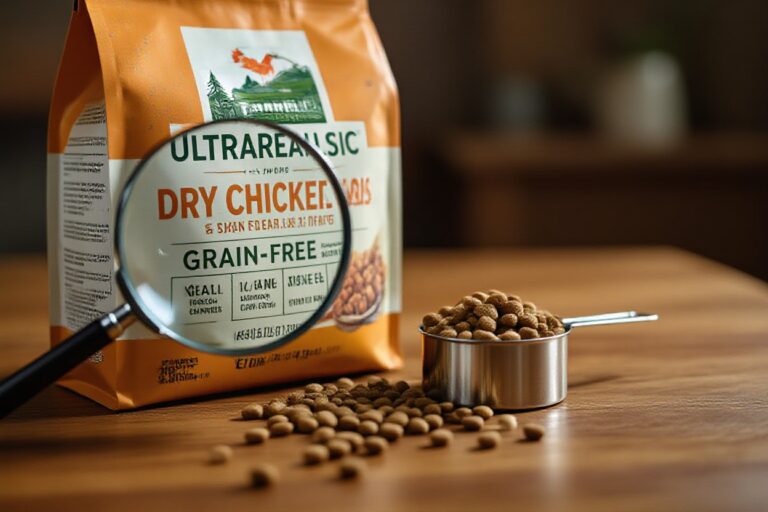
Grain-free dog food simply excludes cereal grains (wheat, corn, rice, oats, barley, and similar crops) from the ingredient list. It does not mean carbohydrate-free, and it does not mean low-calorie or low-carb. Manufacturers still need some form of energy-dense filler to bind kibble together and provide calories, so grains are typically replaced with alternative starches: peas, lentils, chickpeas, potatoes, sweet potatoes, or tapioca. In many grain-free formulas, these legume and tuber ingredients make up a substantial portion of the recipe — sometimes rivaling or exceeding the amount of protein in the food. Protein sources can include chicken, beef, fish, insect protein, or plant-based ingredients.
Is Grain-Free Food Safe for Dogs?
Grain-free dog food gained popularity through promotion as a natural, hypoallergenic diet. But over the past several years, that promise has collided with a serious and still-unresolved health scare involving canine heart disease.
These foods also tend to run higher in protein and fat, and grain-free diets have some genuine potential benefits: better blood sugar regulation, lower mycotoxin risk, and improved palatability for picky eaters. At the same time, they’ve been linked to Dilated Cardiomyopathy (DCM) in certain breeds — a serious condition that can lead to arrhythmia, heart failure, and sudden death.
Breeds most frequently affected in the DCM cases under investigation include:
- Doberman Pinscher
- Golden Retriever
- Great Dane
- Boxer
- Cocker Spaniel
When Should You Use Grain-Free Dog Food?
There’s no scientific proof that grain-free food is consistently healthier for dogs without a specific medical reason to avoid cereals — but it does offer real benefits in certain situations:
- Dogs with a confirmed wheat or barley allergy
- Dogs with recognized gluten sensitivity (wheat-specific)
- Dogs whose current diet is unusually grain-heavy (above roughly 30%) and who are having digestive problems — in these cases, cutting grains is a reasonable and often successful fix
That said, grain-free food is also marketed heavily to dogs with none of these conditions.
The DCM Investigation: Grain-Free Food and Heart Disease
The conversation around grain-free food changed dramatically in 2018, when the U.S. Food and Drug Administration announced it was investigating a possible connection between certain diets and dilated cardiomyopathy — a condition in which the heart muscle weakens and enlarges, gradually losing its ability to pump blood effectively.
DCM has long been recognized as having a genetic basis in certain large and giant breeds, including Doberman Pinschers and Great Danes. What alarmed veterinary cardiologists starting around 2017 and 2018 was a cluster of DCM cases showing up in breeds with no known genetic predisposition to the disease — Golden Retrievers, Labrador Retrievers, and even some smaller breeds — many of which were eating grain-free diets heavy in peas, lentils, or other legumes as primary ingredients.
The FDA opened a formal investigation, and in June 2019 published a list of 16 dog food brands most frequently named in the case reports it had received. The large majority of the listed brands were grain-free, and the announcement triggered a wave of media coverage, consumer concern, and steep sales declines for many boutique and grain-free brands.
Potential Advantages of Grain-Free Dog Food
A well-formulated grain-free product offers alternative carbohydrates and fiber sources — sweet potato, tapioca, or legumes — giving your dog more variety in nutrition and texture.
Grain-free diets may also be worth considering if your dog has a professionally diagnosed sensitivity to a specific cereal ingredient, or if it simply fits your feeding philosophy, provided you’ve checked that the formula is nutritionally complete and the manufacturer is reputable.
Ultimately, a grain-free product should be chosen because it’s the right fit for your dog’s health — not just because of the label.
Neither Miracle Nor Menace
The most defensible position sits between the two extremes that marketing and headlines have pushed pet owners toward.
Grain-free food isn’t a miracle diet. There’s no strong evidence that healthy dogs without diagnosed grain allergies benefit nutritionally from avoiding grains altogether. The “ancestral diet” marketing narrative oversimplifies canine digestive biology — grains themselves are a perfectly digestible, nutritious ingredient for the vast majority of dogs.
At the same time, grain-free food isn’t inherently dangerous simply because it lacks grain. The evidence linking diet to DCM points more specifically at high legume content, and possibly at nutrient bioavailability issues in certain formulations — factors that show up in some grain-free diets but aren’t universal to the whole category, and that can also appear in some grain-inclusive foods.
What Is Grain-Inclusive Dog Food?
Grain-inclusive dog food contains grains as part of its formulation, including:
- Rice (white and brown)
- Oats
- Barley
- Corn
- Millet
- Sorghum
These provide digestible starch, fiber, vitamins, essential fatty acids, and minerals, and are generally safe and nutritious for most dogs.
A common misconception is that grains are just cheap filler. That’s misleading — the World Small Animal Veterinary Association notes that dogs can digest a correctly processed, complete, and balanced grain-inclusive diet well.[1] A quality grain-inclusive formula depends not just on whether grains are present, but on which grains are chosen and how they’re processed.
Advantages of Grain-Inclusive Dog Food
Nutritional benefits
- Whole grains provide fiber, which supports digestive health and stool quality
- Grains offer additional vitamins, minerals, and antioxidants (especially oats and brown rice)
- They’re a source of easily digestible carbohydrates for energy
Health and safety
- Grain-free diets have been linked in FDA investigations to a higher risk of DCM, particularly diets high in legumes (peas, lentils) used as grain substitutes; grain-inclusive formulas sidestep this potential risk factor
- True grain allergies in dogs are actually uncommon — most food sensitivities involve specific proteins, like beef or chicken, rather than grains
Practical advantages
- Generally more affordable than grain-free alternatives
- Wider variety of formulas and brands available
- A long track record of use, backed by decades of research
Worth noting: individual dogs can still have grain sensitivities or intolerances, so this isn’t a universal rule — but for most healthy dogs, grains aren’t something to avoid by default. If your dog has ongoing digestive issues or a suspected allergy, it’s worth checking with a vet before switching formulas.
Is One Actually Bad?
Grain-inclusive food isn’t bad unless your dog has a confirmed sensitivity to a specific ingredient.
Grain-free food isn’t automatically bad either, but some formulas — especially those high in peas, lentils, or potatoes — have been associated with cases of canine DCM. The exact cause is still being studied, but the FDA and veterinary nutrition experts advise caution.
For most dogs, look for food labeled “complete and balanced” that has undergone proper feeding trials or meets AAFCO nutritional standards. Unless your vet has prescribed grain-free food for a specific medical reason, a reputable grain-inclusive diet is usually the safer default. Don’t switch diets abruptly, and consult your vet if your dog develops itching, digestive problems, weight loss, fatigue, coughing, or breathing issues.
What matters most is whether the food provides complete, balanced nutrition, is appropriate for your dog’s life stage, and is manufactured safely.
Grain-Free vs. Grain-Inclusive: What Really Matters?
Rather than focusing solely on whether a food contains grain, owners should weigh a few broader factors.
First, confirm the product is labeled complete and balanced for your dog’s life stage — puppy, adult, or pregnant/lactating. Nutritional needs vary by stage, so grain content alone isn’t a meaningful comparison point.
Look into the manufacturer: who formulates the recipes, what expertise they have, and how ingredients and quality are tested. Check the manufacturing process — safety procedures, traceability, batch identification, storage. And most importantly, watch how your dog actually responds. Appetite, weight, stool quality, energy, coat condition, and digestion all matter more than an impressive label.
When reading ingredient lists, remember that items are ranked by pre-processing weight, so moisture content can skew comparisons between fresh meat and dried ingredients. In grain-free foods, keep an eye on peas, pea protein, and pea fiber, since listing them separately can obscure how much of the recipe is really plant-based. In grain-inclusive foods, note which grains are used and how heavily processed they are. Either way, don’t judge a food by one ingredient’s position on the list alone.
Questions to Ask Before Choosing Grain-Free Dog Food
Before switching to grain-free, it’s worth asking:
About your dog’s health
- Has my vet recommended this, or flagged any reason to avoid it?
About the food itself
- Is it labeled “complete and balanced” per AAFCO standards for my dog’s life stage?
About your specific dog
- Any current heart issues, or a family/breed history of heart disease?
- What’s my dog’s weight, age, and activity level?
Final Thoughts
If your dog has no diagnosed food allergy, there’s no compelling nutritional reason to seek out grain-free food specifically. Look for manufacturers that employ board-certified veterinary nutritionists, conduct feeding trials, and can explain their formulation process — rather than choosing based on a grain-free label alone.
Ultimately, the grain-free versus grain-inclusive debate is a reminder that pet food marketing and actual nutritional science don’t always move in step. The healthiest approach isn’t to chase a label — it’s to evaluate the full ingredient panel, consider your dog’s individual needs, and loop in your veterinarian when something changes.
[1] World Small Animal Veterinary Association
If you would like to read our article on Grain-Free food and how they interact with cats here: Grain-Free Cat Food Explained: What It Means for Cats